Everest Base Camp Trek Packing List
If it’s your first time trekking in Nepal, it can be difficult to decide what to pack for Everest Base Camp trek. The weather can be unpredictable in the mountains, and you have to pack clothes both for warm, sunny days, and cold nights.
When deciding what to pack, I recommend bringing the most essential items, and minimize what you pack. It is better to wear the same clothes for multiple days in a row than to overpack.
I made the mistake of overpacking on my first trek in Nepal back in 2015. Since then, I have done multiple treks in Nepal, and this is my ultimate Everest Base Camp Trek packing list.

➡️ 21 Nov – 4 Dec 2026
What to Consider when Packing for Everest Base Camp Trek
Whether You’ll Hire a Porter or Not

I trekked Everest Base Camp without a porter, but by the end, I came to the conclusion that it would have made the trek much easier if I had a porter.
I have done previous treks in Nepal (Annapurna Base Camp, Langtang, Mardi Himal) without a porter and found it was fine to just pack a light backpack and carry it myself during the trek, but those treks were shorter, around one week maximum.
Everest Base Camp is around 14 days, and carrying your backpack for the whole time gets very tiring towards the end of your trip. It is possible to carry the backpack by yourself (I could also manage it), but having a porter makes it so much easier.
If you book a trek package (the porter is usually included in the package), then the porter carries most of your belongings in a duffel bag, and you only carry a daypack of the most essential items you may need during the day.
Hiring a porter costs around USD 20-25 per day, and one porter carries the bags of two trekkers. So, if you are trekking with a friend then the daily cost is split between the two of you.
Weather

Late autumn (mid-October to mid-December) and spring (March-May) are considered as the best seasons to trek Everest Base Camp. The weather is generally the best during these times, with clear views of the Himalayas.
Weather can be unpredictable in the mountains, so whenever you go on the trek, it is good to prepare for all types of weather. You never know if there may be some sudden snow or rainfall.
Sometimes, even in autumn or spring there can be unpredictable snowfall or rain, so good weather is never guaranteed. Make sure to take weather changes into consideration when packing for EBC.
Autumn and spring are peak seasons, so it tends to be the busiest during these times. Late autumn/early winter (end of November/beginning of December) is a good alternative if you want good weather, but less crowds.
Everest Base Camp Trek Packing List

Backpack (if you trek without a porter)
- Ideal size: 28-35L
If you trek without a porter, you’ll carry your backpack for the whole duration of the trek, so the best is to take a smaller backpack (28-35L) and pack as light as possible.
I have been trekking with a 28L North Face backpack for the last few years and found it’s the best size for a backpack for trekking in Nepal. On my first trek, I went with an overpacked, 40L backpack and it was so heavy, it made my trek miserable.
Now, I prefer to wear the same clothes for multiple days in a row, rather than to pack different clothes for every day. Having a lighter backpack and wearing the same clothes for multiple days is much better than having fresh clothes for every day but suffer along the trek with a heavy backpack.
I use a 28L backpack, and I would say up to 35L is manageable. If you find 28L too small, I would probably go for a backpack around 30-32L.
✅ Shop backpacks here
Daypack (If you have a porter)
- Ideal size: 25-28L
If you hire a porter, then the porter will carry the majority of your items, and you’ll only have to carry a small daypack with essentials. The porters hired through trekking agencies provide duffel bags where you can pack your items. Then, the porter carries the bag during the day to the next village, and you only carry a few essential items in a daypack.
You should just have a few essentials in your daypack (e.g. snacks, jacket, water bottles), keep it light, and it’ll make your day much easier. Once you reach the next village on your trek, the porters drop your main bag at your teahouse, and you get access to all your items.
I recommend getting a daypack around 25-28L. You don’t need a big daypack, otherwise you’ll put too much stuff inside and it will be too heavy. If you prefer a bigger daypack, just make sure to not overpack it.
Footwear
The two essentials footwear to take on the trek are trekking shoes during the day when trekking and slippers for the teahouses.
HIKING SHOES

- How many to pack: 1 pair
People are usually divided whether to take a pair of hiking shoes or trail runners for their trek in Nepal. It’s somewhat up to your preference. If you have done a lot of trekking in trail runners, it can be an option.
I prefer mid-ankle hiking shoes as they provide ankle support. Because the weather is unpredictable in the mountains, I feel more at ease having hiking shoes in case I find myself in a historic, full-scale snowstorm.
I have been using a pair of Salomon hiking shoes for the last few years, and it’s been great and comfortable. I recommend getting your hiking shoes before coming to Nepal. The option for quality hiking shoes is limited in Nepal, and you should go on some hikes and break in your shoes beforehand.
✅ Shop hiking shoes for women here
✅ Shop hiking shoes for men here
SLIPPERS/ FLIP-FLOPS

- How many to pack: 1 pair
Slippers are also a must. You need it once you arrive in the teahouse, and you can change from wearing the hiking shoes to wearing comfortable slippers. Bring slippers that are waterproof, so you can also wear them while you take a shower.
My feet usually gets pretty tired after a day of trekking, and have always found it relaxing for my feet when I change from trekking shoes to slippers.
✅ Shop slippers here
Clothes
DOWN JACKET OR WINDBREAKER JACKET

- How many to pack: 1
Taking a good jacket is just as important as a good pair of hiking shoes. The best is to take a down jacket that you can fold into a small piece that doesn’t take up too much space in your bag.
I usually trek solo, so I got used to just taking a North Face windbreaker jacket, and dressing in layers underneath. When I dress in layers (including thermal and fleece), I don’t feel that cold underneath. I like the windbreaker jacket more than the down jacket, as it takes less space in my backpack. I usually trek without a porter, so if there is any way to make my backpack less heavy, I’ll take it.
If you hire a porter, then taking a down jacket is a nice extra addition to your packing list, so it keeps you warmer in the evenings.
✅ Shop windbreaker jackets for woman here
✅ Shop windbreaker jackets for men here
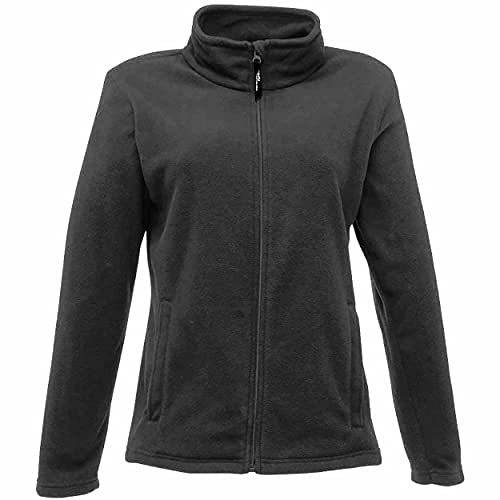
FLEECE JUMPER
- How many to pack: 1
A fleece jumper is great to keep you warm in the evenings. It usually gets too warm during the day to have to wear a fleece, so you’d use it mostly in the evenings. If you trek without a porter, just take one fleece jumper. If you have a porter, then, you can take two.
The best is to get a fleece jumper that has pockets with a zipper, so you can keep stuff there like your phone without having to worry that it falls out of your pocket.
✅ Shop fleece jumper for women here
✅ Shop fleece jumper for men here
QUICK-DRY T-SHIRT

- How many to pack: 4
During the day, it gets pretty warm and sunny on the trek, so you’d just wear a T-shirt or a long-sleeve T-shirt.
It’s good to start trekking around 7:30-8 am and you feel cold only in the first one hour of the trek in the morning, before the sun comes out. On my trek, it would usually be cold until around 8:30 am, and after that, the sun used to come out, then it got warm, and you could just be in a T-shirt.
So, usually, I would start out wearing a windbreaker jacket, and then just wear my T-shirt when it got too hot.
Make sure to get quick-dry T-shirts, in case you want to wash your clothes during the trek, then they dry quickly. (The acclimatization day in Namche is a good time to do laundry).
✅ Shop quick dry T-shirts for women here
✅ Shop quick dry T-shirts for men here
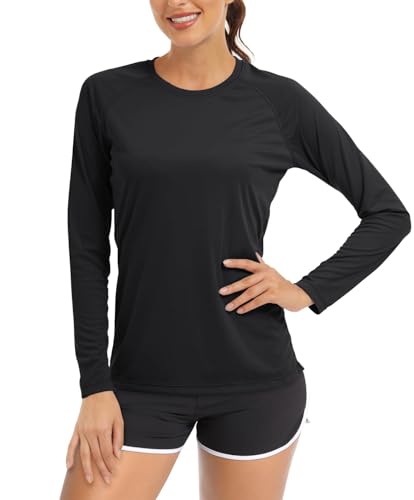
LONG-SLEEVE T-SHIRT
- How many to pack: 1
On days when it got too hot and sunny, I would wear my long-sleeve T-shirt for extra protection from the sun. Get a light, quick-dry long-sleeve T-shirt, so even if you sweat a lot or decide to wash it, then it dries quickly.
✅ Shop long-sleeve T-shirts for women here
✅ Shop long-sleeve T-shirts for men here
TREKKING PANTS/YOGA PANTS


- How many to pack: 3
Bring three pairs of pants for trekking. I usually pack two yoga pants and one trekking trousers, but you could also just pack three pairs of trekking trousers, whichever is more comfortable for you.
The zip-off trekking trousers are great as you can convert it into shorts if it gets too hot. I like to wear the yoga pants on the trek during the day and then put the trekking trousers over it in the evenings if I feel cold.
You don’t need a fresh pair of trousers every day, and I found that three pairs are just fine. If you have a porter, you could pack four pairs, but there is no need to pack one fresh pair for every day.
✅ Shop trekking pants for women here
✅ Shop trekking pants for men here
THERMAL TOP AND BOTTOM

- How many to pack: 1 pair of top and bottom
A thermal top and bottom are a must to pack for the Everest Base Camp trek. It gets super cold in high altitude at night (can easily get lower than -20°C/-4°F), and having a thermal top and bottom makes a big difference.
I usually wear layers at night when I sleep, the thermal layers being one. My first layer is the thermal layer, then I put over it an extra pair of trousers, a long-sleeve T-shirt and a fleece. Together with a Nalgene hot water bottle in my sleeping liner and blankets, I feel warm more or less.
✅ Shop thermal top and bottom for women here
✅ Shop thermal top and bottom for men here
SOCKS & UNDERWEAR


- Socks: 5 pairs of socks (3 thin, 2 thick)
- Underwear: 6
- Sports bra: 2
If you can pack minimal, you also don’t need to pack a fresh pair of socks or underwear for each day. They don’t take up much space, but still, you can save some space in your backpack and reduce the weight if you wear the same socks or underwear for let’s say, two days in a row.
✅ Get anti-blister socks here (perfect for long days of treks)
SUNGLASSES
You should also get a good pair of sunglasses to protect your eyes from UV rays. It is recommended to get a pair of UV-blocking CAT 4 sunglasses.
SUN HAT

It’s pretty hot during the day, and you need lots of sunscreen and a sun hat to protect you against the sun. I trekked EBC in late November and it was still hot during the day. No matter how much sunscreen I used, wore a sun hat and sunglasses, but I still managed to get a bit sunburnt, so be careful.
✅ Get your sun hat here
BEANIE

While you need a sun hat during the day to protect against the sun, you need a beanie in the evening and early mornings. Once the sun goes down in the afternoon, it gets super cold, and you need a warm beanie.
During my EBC trek, the sun used to go down around 3:30 pm, and then it started to get cold and needed to wear my beanie to stay warm. Then, I wore it all throughout the evening, at night while sleeping, and also in the morning until it started to get warm around 8:30 am.
✅ Get your beanie here
NECK GAITER
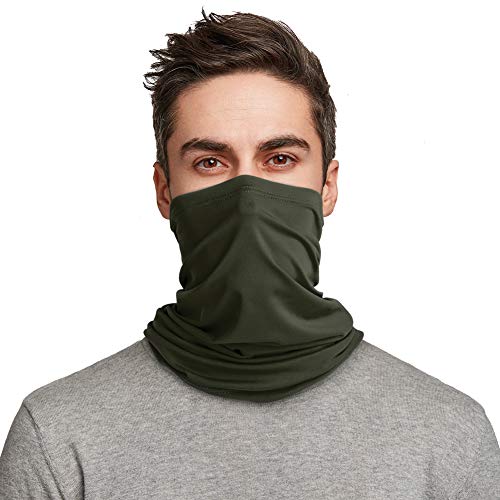
A neck gaiter is a must, and it not only protects your neck from cold and wind, but you can also pull it over your mouth and ears.
In higher altitude (above Dingboche), I wore the neck gaiter sometimes even over my mouth and ears as the weather elements (heat, cold, wind), started to take a toll on me.
✅ Get a neck gaiter here
GLOVES
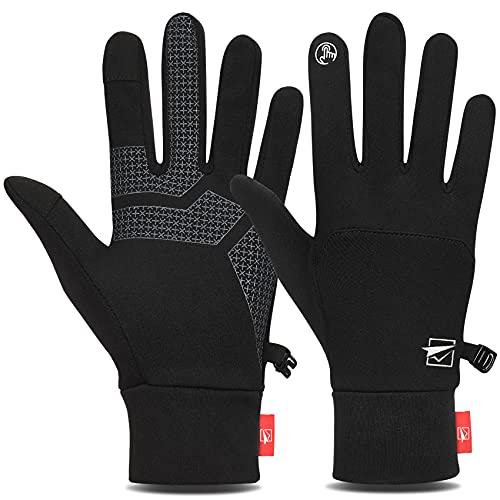
Gloves are also essential to pack for the EBC trek. You need them mostly in the mornings and in the evenings when it’s colder, but I used them on a few times even during the day if when it was windy.
✅ Shop for gloves here
PONCHO

Weather is always unpredictable in the mountains, so even if you go on the trek in autumn or spring (that are considered to be dry), it may still rain.
On previous treks in Nepal, I have tested that even my gore-tex waterproof jacket gets soaked if I have to trek for hours in the rain, so now I always pack a poncho with me.
✅ Get your poncho here
QUICK-DRY TOWEL

Showers are available throughout the trek, but people usually don’t take a shower above Namche Bazaar. Even if you do, you need to use a quick-dry towel, so that it dries quickly and you can pack it when you leave for the next village the next day.
Actually, shower facilities are available all throughout the trek, but above Namche, it gets very cold. I mean that you can get a hot water shower, but once you finish the shower, you feel cold as the temperature is cold at high altitude.
I took my last shower in Namche Bazaar, I felt pretty dirty by not taking a shower for days, but I was worried I could get a cold if I take a shower while the temperature is low in high altitude.
✅ Get a quick-dry towel here
Trekking Essentials
TREKKING POLES
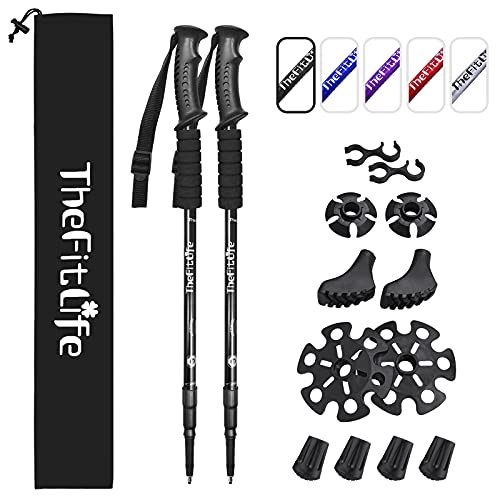
Trekking poles are a must to take on the Everest Base Camp trek. If you forget to take one, you can still buy one in Namche Bazaar, it’s full of trekking shops.
I loved having a trekking pole on the EBC trek. Some parts of the trek are icy and slippery (especially above Dingboche), and the trekking poles helped me balance.
✅ Check out some trekking poles here
CRAMPONS

Crampons are also essential, especially higher up on the trek (around Lobuche – Gorakshep – EBC), where the trail is icy and you need the crampons to give you a good grip.
I used both the crampons and trekking poles, and the two together provided a good balance on the icy trails. I am generally a clumsy person, but having the crampons and trekking poles saved me from slipping off some dangerous icy trails.
✅ Check out crampons here
SLEEPING BAG LINER

If you hire a porter for your trek, you can also take a sleeping bag. In case you are trekking without a porter, and you are trying to minimize the weight of your backpack, then a sleeping bag liner is good enough for the trek.
In the teahouses, you can usually ask for extra blankets, and then together with the sleeping bag liner, you can keep yourself warm. I usually opt for this, as I have been trekking without a porter.
The extra blankets are only available for a limited number of trekkers. If you trek in a group of 10 people and none of you have a sleeping bag, then the teahouse might not be able to provide an extra blanket for everyone. So, if you trek in a big group, it is better to bring a proper sleeping bag.
It does get cold in high altitude, but the sleeping bag liner with the extra blankets, kept me warm. I also got my Nalgene bottle filled with hot water before going to sleep, and I put the warm water bottle inside my sleeping bag liner to work as a heater.
✅ Get a sleeping bag liner here
RAIN COVER FOR BACKPACK

Most backpacks come with a rain cover, so make sure to check that you have yours. If not, you should get one just in case. The best is if you have a rain cover for your backpack and you wear a big poncho that can also go over your backpack in addition.
I have experienced massive, unexpected rainfall while trekking in Nepal, and sometimes even my backpack got soaked with all stuff inside. You need to be prepared for the rain.
✅ Get your rain cover here
WATER PURIFICATION TABLETS

When trekking EBC, you have three options for drinking water. Buy water purification tablets, get a water bottle with a filter, or buy bottled water.
I have ended up buying bottled water during my trek (I know it’s not the best for the environment), but on my previous treks in Nepal, I always got diarrhoea when I used boiled water + water purification tablets, or if I used a water bottle with a filter. They have ‘Carry Me Back’ bags on the trek now and you can collect and bring back your rubbish to Lukla after finishing your trek.
Even if you don’t plan on using water purification tablets, it’s good to take a pack (calculate around 4 tablets per day) just in case. I took water purification tablets with me but ended up not using them and just bought the bottled water as I didn’t want to risk getting diarrhoea.
✅ Get water purification tablets here
RE-USABLE WATER BOTTLES


- How many to pack: 2 (1 Nalgene bottle and 1 thermos bottle)
You should bring two water bottles for your trek, and there are various options which type of water bottle to take, so it also depends on your preference.
I like to take a Nalgene bottle and a thermos bottle on my treks. The Nalgene bottle can be filled with hot water in the evenings, keep inside my sleeping bag liner, and use it like a heater at night. The thermos is great as it keeps the water warm in the morning and evenings when I prefer a warm drink.
One thing I considered after my EBC trek, is that having a water bladder would have also been great. It has a long straw, so you can drink anytime during the trek, and you don’t have to stop and reach for your water bottle all the time.
If I was to trek EBC again and had a porter, I might even bring three water bottles. One water bladder and thermos in my daypack and keep the Nalgene bottle in the duffel bag with the porter. So, I would just use the Nalgene bottle in the evenings as a heater.
✅ Shop Nalgene water bottles here
✅ Shop thermos bottles here
Electronics
POWER BANK/PORTABLE CHARGER

Bringing a power bank/portable charger for the trek is also a must. In lower altitudes of the trek (Phakding, Namche, Tengboche), there is electricity in the rooms, so you can charge your phone and power banks anytime you want.
In higher altitudes (Dingboche, Lobuche, Gorakshep), the electricity is limited, and you have to pay extra for charging phones and power banks. So, if you have fully charged power banks, you can use them instead of paying extra for charging your phone at the teahouses. Or you can alternate between using the charger at the teahouses and charging your phone using your power bank.
I only took one power bank (10,000 mAh) with me on my trek, but I wish I had taken two 20,000 mAh. I think if you have two power banks (each 20,000 mAh), they may last for the days in the high altitude for charging your phone.
✅ Shop power banks here
PLUG ADAPTER
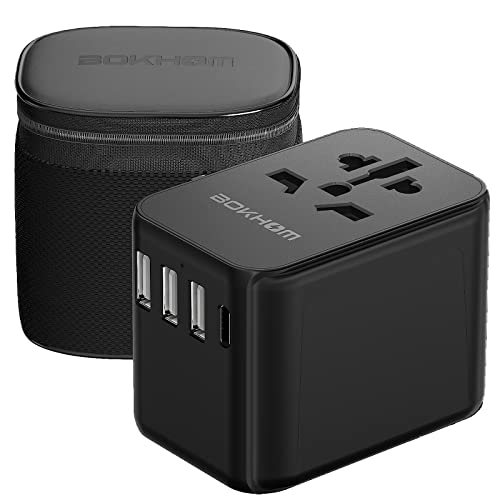
Nepal mostly uses the plug C type, which has two round pins, but in some teahouses/hotels, they also have the plug where you can fit the UK type plugs. If you don’t have the plug C type plug, I recommend getting an adapter to be on the safe side.
✅ Shop plug adapters here
HEADLAMP
![Lepro Head Torch Rechargeable, [2 Pack] 2000L Waterproof LED Headlamp with Red Warning Lights, 6 Lighting Modes, Long Runtime, Lightweight Headlight for Kids & Adults for Running Fishing Camping](https://m.media-amazon.com/images/I/51+ZTUnXcqL._SL500_.jpg)
Having a headlamp is also crucial for the EBC trek, especially if you go to Kala Patthar for sunrise during the trek.
On other trekking routes in Nepal (Annapurna region, Langtang), the teahouses are more basic and sometimes the toilets are outside the main teahouse building where the bedrooms are, so in that case, you also need a headlamp to go to the toilet at night.
On the EBC trek, the teahouses are a bit better, and the toilets are inside the teahouse, so you don’t need a headlamp for that. But if you go on the sunrise hike to Kala Patthar, then you need a good headlamp as you start the hike around 3:30 am in the dark.
✅ Shop headlamps here
First Aid Kit/Medicines
Bring a small first aid kit with some general medicine and any personal medicine that you take. Bring some paracetamol, medicine for diarrhoea, common cold, plasters, and Diamox for altitude sickness.
Toiletries
Bring the small, travel-size version of essential toiletries, such as sunscreen, hand sanitizer, shampoo, shower gel, body lotion, face cream, lip balm, and deodorant.
It’s also good to bring some baby wipes (there will most likely be a few days when you don’t take a shower), so baby wipes come handy. I usually also take one roll of toilet paper and lots of tissues. You can buy these in the teahouses, but it’s good to have some with you in the beginning and just buy some extra after you run out of your supplies.
Other items to bring are a hairbrush, nail clipper, and sanitary products (if you are likely to get your period during the trek).
Snacks
There are lots of teahouses along the trail, so you can stop for a meal or snack often during the day, but it is good to pack some snacks with you for the trek. You can get all types of snacks, e.g. energy bars, chocolate, crisps. If you have a favourite brand, it is better to bring it from home.
The price of food goes up the higher you go on the trail, and having some snacks with you can save you a bit of money.
Entertainment
Usually, you trek from around 7:30 am to 3 pm on most days, and after you get to the teahouse in the afternoon, you have free time to relax. If you are in a group, it’s good to have some cards that you can play with in the afternoon/ evenings.
Others
Travel Insurance
Travel insurance is a must for the Everest Base Camp Trek, and you have to get one which covers emergency helicopter evacuation up to 6,000 m (20,000 ft).
There are lots of travel insurance companies, usually, World Nomads work well for travelers of all countries, Travelex for USA residents, and True Traveller for EU/UK citizens.
Permits
You have to get two permits to trek Everest Base Camp. One is the Sagarmatha National Park permit and the Khumbu Pasanglhamu Rural Municipality permit. Each permit costs Rs. 3,000 (USD 22).
If you booked a trek with a trekking agency, they arrange the permits for you, and you don’t have to get them yourself. If you are trekking solo, you can get the permits either in Kathmandu at the Tourism Board or in Monjo during the trek.
I also got my permits in Monjo during the trek, and it went smoothly. I trekked during the autumn main season, so there were other people getting their permits too, but it took only around 10 minutes in total for me to get the permits.
Cash
You should budget and withdraw enough cash in Kathmandu before you leave for the trek as ATMs are limited on the trek. There are ATMs in Namche Bazaar, but the ATMs are unreliable and can run out of cash.
The best is to budget at least USD 40 (Rs. 6,000) per day for EBC. This budget is more on the higher end, but this way, you have enough cash and you don’t have to debate whether to buy an extra snack or not. It’s better to take more cash than you estimate and have some left over to spend when you are back in Kathmandu, then to have to cut back on your spending or fearing you may run out of cash mid-way through the trek.
During my EBC trek, I spent around USD 27 (around Rs. 4,000) per day on average. In lower altitudes, I spent a bit less, and in higher altitudes, I spent a bit more. My EBC cost includes 3 meals per day, snacks, shower, drinking water, charging and wifi. I had some snacks, but didn’t splurge that much. I also didn’t drink beer during the trek. If you like to have beer, budget an extra Rs. 1,000 (USD 7) per can.

Frequently Asked Questions
Do I need a sleeping bag for Everest Base Camp Trek?
Having a sleeping bag makes EBC trek more comfortable but only bring it if you have a porter who will carry your main bag. If you are trekking without a porter and you are carrying all your items, it is better to just bring a sleeping bag liner (it is less heavy and takes up less space) and ask for an extra blanket at the teahouse to keep you warm.
What size of daypack should I take for Everest Base Camp Trek?
You should bring a daypack of around 25-28L for the Everest Base Camp trek. If you have a porter that carries your main bag, then you only have to put a few essential items in your daypack. Keep your daypack light, so that your trek is easier with a lighter daypack.
My Final Tips on What to Pack for Everest Base Camp Trek
Overall, I recommend packing only the most essential items for EBC. You should pack all the essential items but be careful not to overpack. Usually, you end up needing less than what you pack.
On my first trek in Nepal, I remember that I overpacked by large and really suffered having to carry a heavy backpack. Even if you have a porter, they can carry only the bags of two trekkers (10 kg per trekker), so your items are limited.
Before coming to Nepal, I recommend getting a good pair of hiking boots and break them in before the trek. In terms of hiking shoes, the options in Kathmandu are limited, especially having limited sizes, but otherwise, you can get everything else in Kathmandu in case you forget to get something before you arrive.
➡️ Ready to go? Join me on a trek to Everest Base Camp!
More about Trekking EBC
- Everest Base Camp Trek Itinerary
- Everest Base Camp Trek Cost
- Teahouses on the Everest Base Camp Trek
Pin This Post & Save it for Later!


Travelling Mandala contains affiliate links and is a member of the Amazon LLC Associates Program. If you make a purchase using one of these Amazon links, I may receive compensation at no extra cost to you. Read my Disclosure Policy for more information.


